
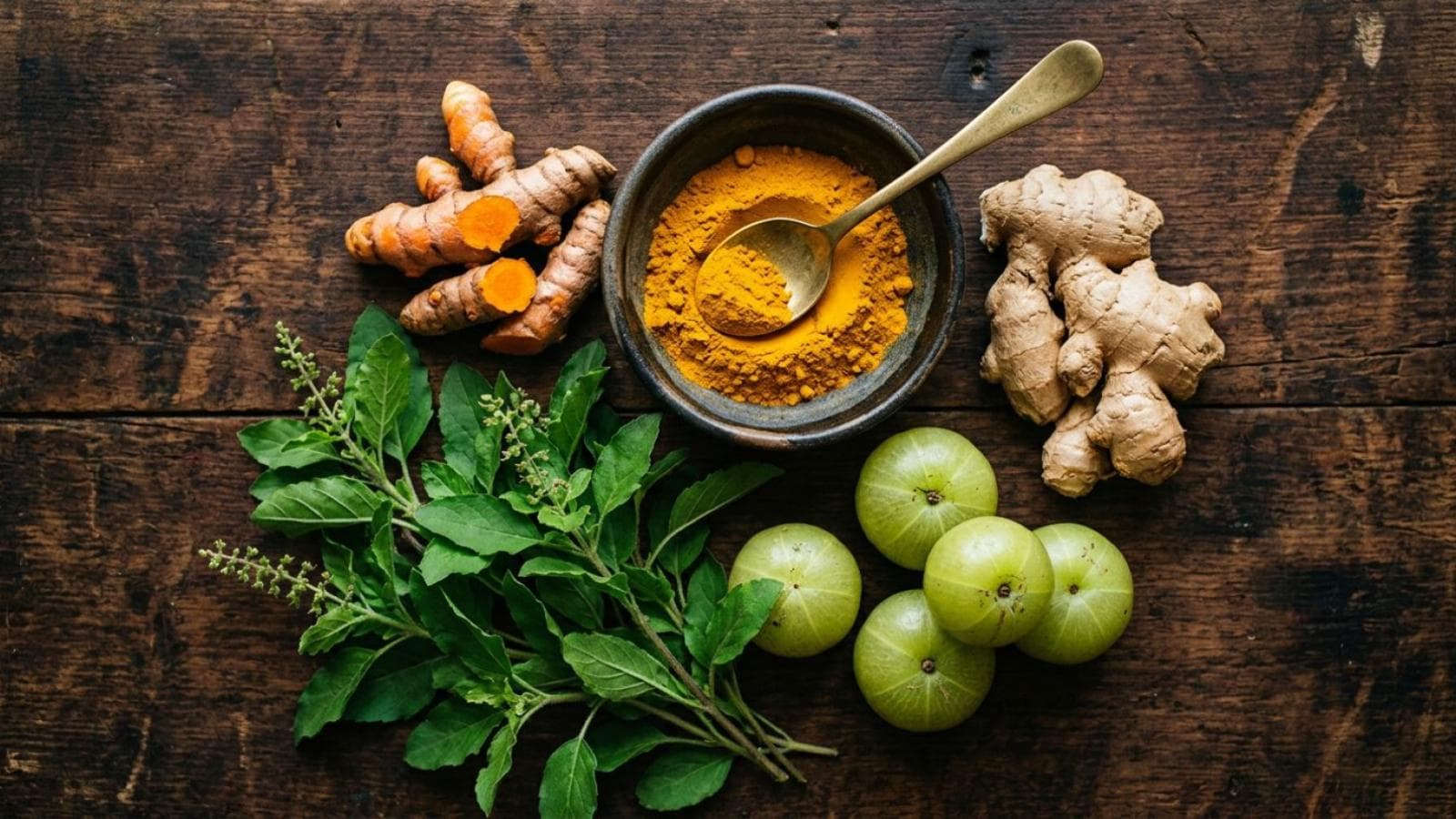
Long before "superfoods" became a marketing term, Ayurveda was describing everyday kitchen ingredients as part of a broader approach to general wellbeing. Turmeric, ginger, tulsi, and amla are staples in many Indian kitchens, and each has a long traditional history within Ayurveda. It is important to be clear from the outset: these foods are discussed here as general wellness supports, not as treatments or preventive measures for any specific disease. This article looks at their traditional uses, simple ways to include them in daily life, and important cautions to keep in mind.
Turmeric (Haridra)
Turmeric is one of the most recognisable ingredients in Ayurvedic cooking, valued traditionally for its warming, supportive qualities. It is commonly used in daily cooking — in dals, vegetables, and warm milk ("haldi doodh").
Simple Ways to Include It
A pinch of turmeric in your daily cooking, or a small cup of warm turmeric milk in the evening, are traditional, simple ways many households already include it.
A Caution to Keep in Mind
Turmeric, particularly in concentrated supplement form, may interact with blood-thinning medication. If you are on anticoagulants or have an upcoming surgery, speak with your doctor before taking turmeric supplements (culinary use in food is generally a different consideration, but it is still worth mentioning to your physician if you are on such medication).
Ginger (Shunthi/Ardraka)
Fresh or dried ginger is traditionally used in Ayurveda to support digestion and is a common addition to teas, soups, and cooking, especially during cooler months.
Simple Ways to Include It
A slice of fresh ginger steeped in warm water, or added to your morning tea, is a simple traditional practice.
A Caution to Keep in Mind
Ginger in larger or concentrated amounts is generally advised against during certain stages of pregnancy without medical guidance — pregnant readers should check with their obstetrician before increasing ginger intake beyond normal culinary use.
Tulsi (Holy Basil)
Tulsi holds a significant place in Indian households, both culturally and within Ayurveda, where it is traditionally valued for general respiratory and digestive wellbeing support.
Simple Ways to Include It
Tulsi tea, made by steeping fresh or dried leaves in hot water, is a simple and widely enjoyed way to include it in a daily routine.
A Caution to Keep in Mind
Tulsi may interact with certain medications, including some blood-thinning and blood-sugar-related medications. If you are on regular medication, mention any regular tulsi use to your doctor.
Amla (Indian Gooseberry)
Amla is traditionally valued in Ayurveda and is a well-known ingredient in preparations like chyawanprash. It is naturally rich in vitamin C and is often included as part of a balanced diet supporting general wellbeing.
Simple Ways to Include It
Fresh amla, amla juice, or amla murabba (a traditional preserve) are common ways to include it, though portion and frequency should suit your individual digestion — Ayurvedic guidance would consider this individually rather than prescribing a fixed amount for everyone.
Why Ayurveda Emphasises Digestion Over Individual Ingredients
A recurring theme across Ayurvedic nutrition is the emphasis on agni, or digestive fire, as foundational to overall wellbeing. Rather than focusing purely on the properties of any single ingredient, traditional guidance considers how well a food is digested by a given individual at a given time. This is part of why Ayurveda avoids blanket claims about any one food being universally beneficial — the same food may suit one person's digestion well while feeling heavy or difficult for another, depending on their current state.
Other Everyday Ayurvedic Kitchen Staples
Beyond these four, cumin, coriander, fennel, and black pepper are also traditionally valued in Ayurvedic cooking for their role in supporting digestion, which Ayurveda considers foundational to general wellbeing. Including a variety of these spices in your regular cooking, rather than relying on a single "miracle" ingredient, is more in line with the traditional Ayurvedic approach to food.
A General Wellness Support, Not a Treatment
It is worth repeating clearly: none of the foods discussed in this article should be understood as preventing or treating any disease, including infections. They are traditional dietary elements that some people include as part of a broader approach to general wellbeing, alongside — never instead of — appropriate medical care, vaccination schedules, and hygiene practices recommended by your doctor.
Precautions
- These foods and spices are general wellness additions to a balanced diet — they are not medicines and are not a substitute for prescribed treatment.
- If you are pregnant or breastfeeding, check with your doctor before significantly increasing intake of any of these beyond typical culinary amounts.
- If you are on regular medication — especially blood-thinners, diabetes medication, or thyroid medication — mention any regular use of turmeric, ginger, or tulsi supplements to your doctor, as interactions are possible.
- Introduce new foods gradually and observe how your digestion responds, particularly if you have a sensitive digestive system.
When to Consult a Doctor Instead of Self-Treating
If you are experiencing persistent symptoms, a suspected infection, or any concerning health issue, please consult a doctor rather than relying on dietary changes alone. Traditional foods can be a supportive part of a wellness-oriented lifestyle, but they are not appropriate substitutes for diagnosis or medical treatment.
Frequently Asked Questions
Can these foods prevent me from getting sick?
No. We cannot claim that any food prevents illness or infection. These are traditional dietary elements associated with general wellbeing support, not disease prevention or treatment.
How much turmeric or ginger is safe per day?
Typical culinary amounts used in everyday Indian cooking are generally considered a normal part of a balanced diet for most people. If you are considering concentrated supplements, this is a different question best discussed with your doctor or an Ayurvedic practitioner.
Can children have these foods?
Many of these are common in Indian family cooking and can be part of a child's diet in age-appropriate culinary amounts. For any concentrated supplement or unusual quantity, please consult a paediatrician first.
Are these foods a substitute for a healthy overall diet?
No. They work best as part of a varied, balanced diet rather than as isolated additions expected to compensate for otherwise poor nutrition.
Should I stop my prescribed medication if I start eating these foods regularly?
No — never stop or change prescribed medication based on dietary changes without speaking to your doctor first.
Medical Disclaimer
This article is for general educational purposes and reflects traditional Ayurvedic dietary practices. It does not diagnose, treat, cure, or prevent any disease, and it is not a substitute for professional medical advice. Please consult your doctor before making significant dietary changes, especially if pregnant, breastfeeding, managing a chronic condition, or on regular medication.
Conclusion
Turmeric, ginger, tulsi, and amla have earned their place in Indian kitchens over centuries, valued in Ayurveda as part of a broader lifestyle approach to general wellbeing. Used thoughtfully, and alongside proper medical care where needed, they can be a warm, simple addition to your everyday routine. If you would like to explore how specific foods and herbs might complement your skin or overall wellness routine, take a look at our guide to Ayurvedic herbs for healthy skin. To discuss a more personalised dietary approach, book an appointment with our practitioners at Shuddham Ayurveda.
Diksha Dhiman
Dr. Diksha Dhiman is a BAMS-qualified Ayurvedic physician and Certified Rehabilitation and Ayurvedic Vaidya (C.R.A.V.), specialising in Keralite Panchakarma therapies. She practices at the Shuddham Ayurveda flagship clinic in Mohali, guiding patients through personalised Ayurvedic care rooted in classical texts and modern clinical safety.