
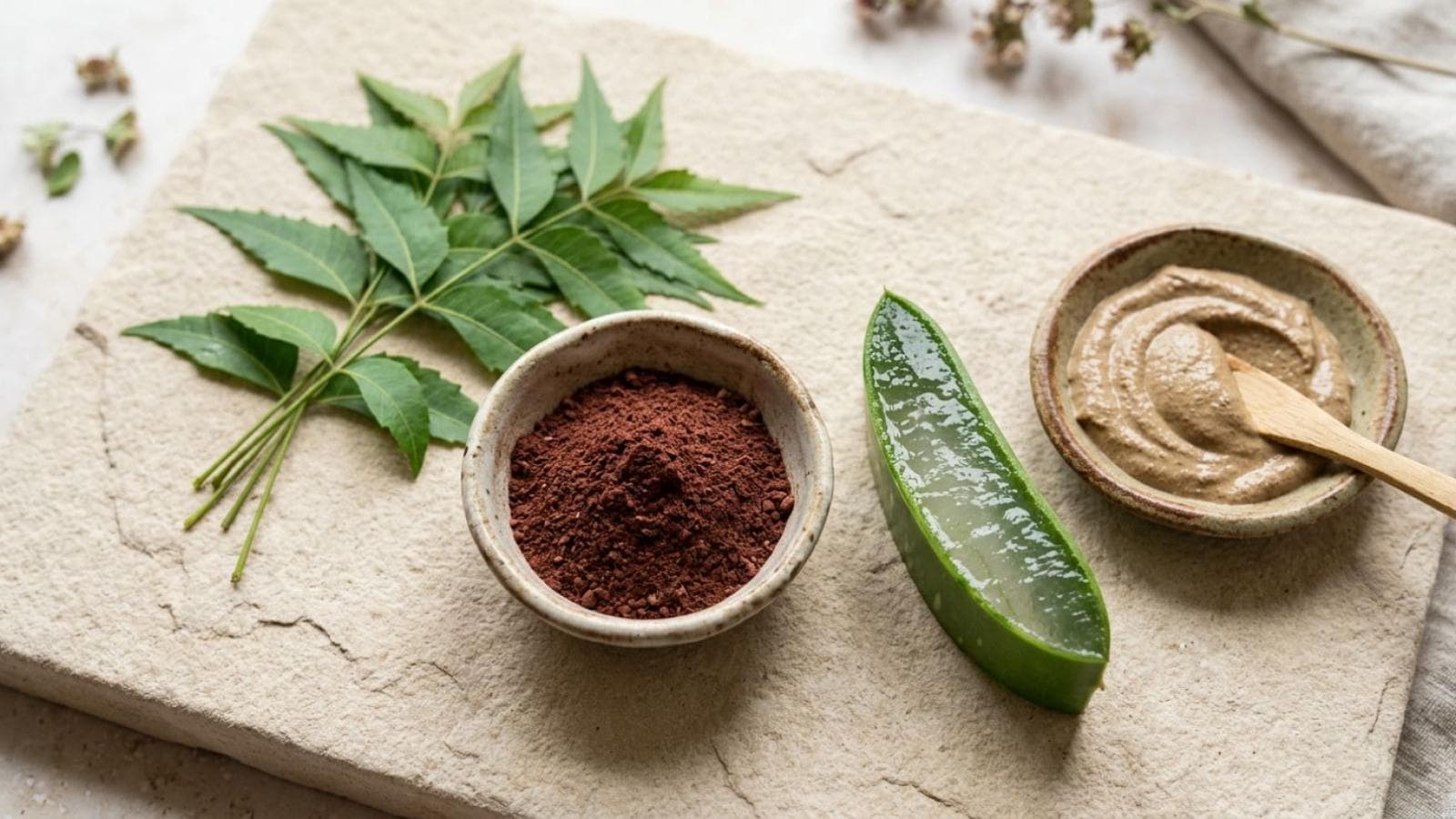
Skin care has deep roots in Ayurvedic tradition, and several herbs — including neem, manjistha, and aloe vera — are commonly found in Ayurvedic formulations aimed at supporting healthy-looking skin. This guide explores their traditional uses, how to introduce them safely, and importantly, when a skin concern needs professional attention rather than a home remedy.
Neem
Neem is one of the most widely recognised herbs in Ayurvedic skin care, traditionally valued for its purifying and cooling properties. It appears in various forms — neem oil, neem powder, dried neem leaves, and neem-infused soaps and creams — and has a long-standing place in household skin care routines across many parts of India.
Traditional Use
Neem paste, made by grinding dried or fresh neem leaves with a small amount of water, has traditionally been applied topically as part of general skin care routines, often left on briefly before rinsing. Neem-infused oils and packs combined with other ingredients like turmeric are also common in traditional formulations. Some people also consume neem in small culinary amounts, though this is a separate consideration from topical use and should be approached cautiously.
What Makes Neem Distinctive
Compared to gentler botanicals, neem is considered a relatively potent herb in Ayurvedic classification, which is part of why it has such a strong traditional reputation for skin purification, but is also why caution and dilution matter more with neem than with milder ingredients.
Manjistha
Manjistha (Indian madder, Rubia cordifolia) is another herb with a long history in Ayurvedic skin formulations, traditionally associated with supporting clear, even-toned skin and healthy-looking complexion as part of a broader wellness approach. In classical Ayurvedic thinking, manjistha is often associated with supporting the health of rakta dhatu, the blood tissue, which is why it appears both in topical skin formulations and in internal herbal preparations.
How Manjistha Is Typically Used
As a powder, manjistha is often mixed with rosewater or plain water to form a paste applied as a face pack. It is also available in tablet or capsule form for internal use, though this should generally be guided by a qualified practitioner rather than self-prescribed, particularly regarding appropriate dosage and duration of use.
Aloe Vera
Aloe vera gel is a well-known traditional skin care ingredient across many cultures, not just Ayurveda, valued for its soothing, cooling qualities, particularly for skin that feels irritated, dry, or sun-exposed. Fresh aloe gel, extracted directly from the leaf, is commonly used, though many people also use commercially prepared aloe products, which can vary considerably in purity and added ingredients.
Using Fresh vs. Packaged Aloe
If using fresh aloe vera from a home plant, the yellowish latex just under the outer skin of the leaf, distinct from the clear inner gel, can be irritating for some people and is traditionally discarded before use. If you are unsure how to prepare fresh aloe safely, a mild commercially prepared aloe gel with minimal added ingredients can be a simpler starting point.
How to Introduce These Herbs Safely
Always Patch-Test First
Before applying any new herb or herbal product to your face or a larger area of skin, apply a small amount to a discreet patch of skin — such as the inner forearm — and wait 24 to 48 hours to check for any redness, itching, or irritation. This is a simple but important step that is often skipped.
Introduce One New Product at a Time
If you are trying several new herbal skin products, introduce them one at a time rather than all together. This makes it much easier to identify the cause if you do experience any reaction.
Do Not Assume Universal Safety
It is important not to assume that because an ingredient is "natural" or "traditional," it is automatically safe for everyone. Individual skin sensitivities vary considerably, and what suits one person may cause irritation in another. This is especially true for neem, which can be quite potent for sensitive skin types.
Precautions
- Always patch-test any new herbal skin product before wider application, even if it is described as "natural" or "traditional."
- Discontinue use immediately if you notice redness, itching, burning, or swelling, and rinse the area with clean water.
- If you are pregnant or breastfeeding, check with your doctor before using concentrated herbal preparations, particularly any taken internally.
- Herbal skin products are not a substitute for sun protection, and Ayurvedic skin care should be seen as a complement to, not a replacement for, basic dermatological hygiene.
- Do not apply any herbal preparation to broken skin, open wounds, or actively infected areas without professional guidance.
When Skin Issues Need a Dermatologist or Vaidya, Not Self-Treatment
Persistent skin issues — including ongoing acne, unexplained rashes, significant pigmentation changes, suspected infections, or any skin change that is painful, spreading, or not improving — should be evaluated by a dermatologist or a qualified Ayurvedic practitioner rather than managed through self-directed herbal experimentation. Early professional assessment can help identify the underlying cause and appropriate care, which self-treatment with herbs cannot reliably substitute for.
At Shuddham Ayurveda, our practitioners can help assess whether an Ayurvedic approach may be a suitable complement to your skin care, always within the context of a proper evaluation.
Who Should Consult a Qualified Practitioner
If you have a diagnosed skin condition, are using prescription skin treatments, are pregnant or breastfeeding, or have particularly sensitive or reactive skin, please consult a dermatologist or qualified Ayurvedic practitioner before introducing new herbal products, rather than relying solely on general guidance like this article.
Frequently Asked Questions
Is neem safe for all skin types?
Not necessarily. Neem can be quite potent and may cause irritation in sensitive skin types. Always patch-test first, and consider diluting concentrated neem preparations.
Can these herbs cure acne or pigmentation?
We cannot promise cures or guaranteed results for any skin condition. These herbs are traditionally used as supportive elements within a broader skin care approach, not as guaranteed treatments.
How long before I might notice a difference in my skin?
Responses vary significantly between individuals, and we cannot promise a specific timeline or outcome. Many traditional approaches are used consistently over weeks as part of an overall routine, not as a quick fix.
Can I use manjistha internally as well as on my skin?
Manjistha is used both topically and internally in some Ayurvedic formulations, but internal use should be guided by a qualified practitioner rather than self-directed, particularly regarding dosage.
Are Ayurvedic skin herbs a replacement for sunscreen?
No. Herbal skin care should complement, not replace, basic sun protection and general dermatological hygiene practices.
Medical Disclaimer
This article is for general educational purposes and describes traditional Ayurvedic skin care practices. It is not medical advice and does not diagnose or treat any skin condition. Please consult a dermatologist or qualified Ayurvedic practitioner for persistent, painful, or concerning skin issues, and always patch-test new products.
Conclusion
Ayurveda's approach to skin care emphasises gentle, consistent, and mindful use of traditional herbs like neem, manjistha, and aloe vera, always balanced with common-sense safety practices like patch-testing. When skin concerns persist, professional evaluation remains the safest path forward. To explore how nutrition also supports overall wellbeing, read our guide to Ayurvedic foods for general wellbeing. For a personalised assessment, book an appointment with our practitioners at Shuddham Ayurveda, Mohali.
Diksha Dhiman
Dr. Diksha Dhiman is a BAMS-qualified Ayurvedic physician and Certified Rehabilitation and Ayurvedic Vaidya (C.R.A.V.), specialising in Keralite Panchakarma therapies. She practices at the Shuddham Ayurveda flagship clinic in Mohali, guiding patients through personalised Ayurvedic care rooted in classical texts and modern clinical safety.