
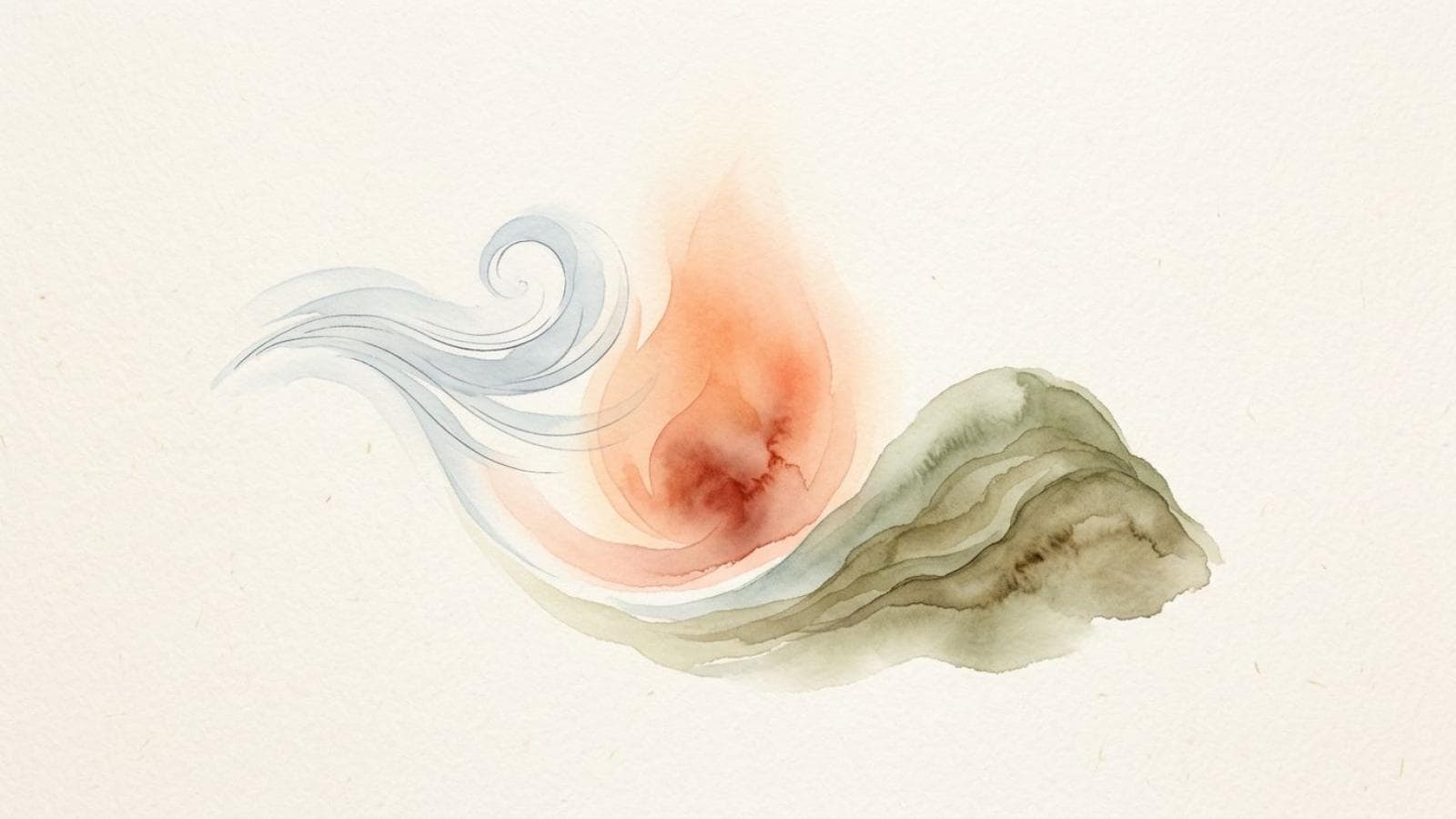
If you have spent any time exploring Ayurveda, you have likely come across the words Vata, Pitta, and Kapha. These three doshas are central to how Ayurveda understands the human body and mind, but they are often misunderstood as rigid personality "types" or, worse, mistaken for a medical diagnosis. In reality, the doshas are a traditional Ayurvedic wellness framework — a way of describing patterns and tendencies, not a clinical classification. This article explains what each dosha represents, how your baseline constitution differs from your current state of balance, and how this understanding can inform lifestyle and treatment choices at Shuddham Ayurveda.
What Are the Three Doshas?
Ayurveda describes the body and mind through three functional energies, each built from combinations of the five elements (space, air, fire, water, earth):
Vata — Air and Space
Vata governs movement — things like circulation, breathing, nerve impulses, and elimination. People with a Vata-dominant tendency are often described as quick-thinking, creative, and energetic, but may also be prone to dryness, variable digestion, restlessness, or feeling easily overwhelmed when out of balance.
Pitta — Fire and Water
Pitta governs transformation — metabolism, digestion, and how the body processes food and information. Pitta-dominant individuals are often described as focused, driven, and articulate, with a tendency toward strong digestion. When out of balance, Pitta traits can show up as irritability, excess body heat, or skin sensitivity.
Kapha — Earth and Water
Kapha governs structure and stability — think of it as the body's capacity for lubrication, cohesion, and steady energy. Kapha-dominant individuals are often described as calm, grounded, and nurturing, with strong stamina. When out of balance, Kapha traits can show up as sluggishness, weight gain, or a feeling of heaviness.
Prakriti vs. Vikriti: Constitution vs. Current Imbalance
One of the most important — and most commonly misunderstood — Ayurvedic concepts is the distinction between two related ideas:
- Prakriti is your baseline constitution, established at conception, generally understood to remain the same throughout life. Most people are not a single pure dosha but a combination, often with one or two doshas more prominent.
- Vikriti is your current state — how your doshas are expressed right now, influenced by diet, season, stress, sleep, and lifestyle. Vikriti can shift day to day or season to season.
Understanding both is useful: your prakriti tells you your natural tendencies, while your vikriti tells you where you may currently be out of balance relative to that baseline. Ayurvedic guidance is generally aimed at gently supporting a return toward your natural equilibrium rather than pushing you toward someone else's ideal.
A Simple Self-Observation Guide
The following is a general self-reflection exercise, not a diagnostic tool, and it does not replace an assessment by a trained Ayurvedic practitioner. As you read through the tendencies below, notice which descriptions feel familiar over time, rather than trying to force yourself into one category.
Consider Your Physical Tendencies
Do you tend to have dry skin and a light frame (possible Vata tendency), a medium build with strong appetite (possible Pitta tendency), or a sturdier frame with steady energy (possible Kapha tendency)? These are broad generalisations meant only as a starting point for reflection.
Consider Your Mental and Emotional Patterns
Notice whether you tend toward quick, changeable thinking; sharp, focused intensity; or calm, steady patience. Again, most people notice a blend rather than one extreme.
Consider Your Current Season and Lifestyle
Your current vikriti may shift with the seasons, stress levels, travel, or changes in routine. If you have been under significant stress recently, you may notice more Vata-like symptoms (restlessness, dry skin, disrupted sleep) even if your baseline constitution leans differently.
This exercise is meant to build self-awareness, not to self-diagnose a condition. A qualified vaidya can offer a far more nuanced assessment through pulse reading, physical examination, and detailed history-taking.
How Dosha Understanding Informs Diet, Routine, and Treatment
At Shuddham Ayurveda, our practitioners use a person's prakriti and current vikriti as one part of a broader clinical picture when recommending diet, daily routine, or treatments. For example, someone showing Vata-type imbalance may be guided toward warm, grounding foods and a more regular routine, while someone with Pitta-type imbalance may be guided toward cooling foods and stress-reduction practices. These are general directional principles used alongside a full clinical evaluation — not a one-size-fits-all prescription based on a quiz result.
Seasonal changes also interact with your doshas in predictable ways, which is explored further in our guide to seasonal Ayurvedic wellness.
Precautions
- Doshas are a traditional wellness framework, not a medical diagnosis. They should never be used to self-diagnose or self-treat a health condition.
- Online dosha quizzes can be a fun starting point for curiosity, but they are not clinically validated diagnostic tools and should not replace an in-person assessment by a trained Ayurvedic practitioner.
- If you are pregnant, managing a chronic condition, or on prescribed medication, any dietary or lifestyle changes inspired by dosha understanding should be discussed with your doctor or a qualified vaidya first.
Who Should Consult a Qualified Practitioner
If you are dealing with persistent symptoms, a diagnosed medical condition, or simply want a proper assessment of your constitution rather than a self-guided estimate, we recommend consulting a qualified Ayurvedic practitioner. A structured consultation considers far more detail than any self-observation checklist can.
Frequently Asked Questions
Can I be more than one dosha?
Yes — in fact, most people have a combination of two dominant doshas (for example, Vata-Pitta or Pitta-Kapha), and a smaller group show a fairly even balance of all three. A single pure dosha type is relatively uncommon.
Does my dosha ever change?
Your baseline prakriti is generally considered stable throughout life, while your current state (vikriti) can shift with diet, stress, season, and lifestyle. This is why Ayurvedic guidance often focuses on your present state alongside your baseline.
Is a dosha imbalance the same as being sick?
No. Dosha imbalance is an Ayurvedic wellness concept describing a shift away from your natural equilibrium — it is not equivalent to a medical diagnosis and should not be treated as one. If you have concerning symptoms, please consult a doctor.
Can two people with the same dosha need different care?
Yes. Ayurvedic assessment considers many factors beyond dosha type alone — age, digestion, current health status, season, and more — so a personalised consultation is always more accurate than a general dosha description.
How accurate are free online dosha quizzes?
They can offer a general introduction to the concepts, but they are not a substitute for a professional assessment and should be treated as educational rather than diagnostic.
A Note on Safety
This article is intended for general education about Ayurvedic concepts. It does not diagnose any medical or psychological condition, and dosha-based observations should never replace medical advice from a qualified healthcare provider.
Conclusion
Understanding Vata, Pitta, and Kapha can offer a useful lens for thinking about your habits, tendencies, and current state of balance. But the real value of Ayurveda comes from applying these concepts thoughtfully, with guidance from a trained practitioner who can look at your complete picture rather than a checklist. If you would like a professional assessment of your constitution, our team would be glad to help — you might also enjoy pairing this understanding with our guide to Ayurvedic morning rituals. Book an appointment with Shuddham Ayurveda to explore your constitution in more depth.
Diksha Dhiman
Dr. Diksha Dhiman is a BAMS-qualified Ayurvedic physician and Certified Rehabilitation and Ayurvedic Vaidya (C.R.A.V.), specialising in Keralite Panchakarma therapies. She practices at the Shuddham Ayurveda flagship clinic in Mohali, guiding patients through personalised Ayurvedic care rooted in classical texts and modern clinical safety.